
Ingenuity Drives Impact
At the CRI, our strength lies in delivering a comprehensive and customizable suite of services that support the unique needs of Northeastern researchers—across every discipline, commercialization goals, and technology readiness level. With a commitment to deep tech and research-driven innovation, the CRI empowers researchers to protect intellectual property, advance discoveries, and forge industry partnerships that generate meaningful societal value and drive regional economic growth.
Tech Transfer Workflow
The desire to have impact through research and innovations is a universal theme at Northeastern University. The CRI is your dedicated partner in this pursuit, offering strategic intellectual property protection, venture creation resources and access to corporate relationships. This diagram summarizes the steps the CRI takes to translate the university’s groundbreaking work into real-world solutions.

Submitting a Disclosure
WHAT IS A DISCLOSURE?
A disclosure is a detailed description of an invention that begins the process of protecting your research at Northeastern. Disclosures outline the novel, non-obvious, and useful features of inventions and are used to assess patent and commercial viability.
WHY DISCLOSE?

Disclosing, prior to working with the CRI, mobilizes university resources for protecting innovation and stimulates funding opportunities for accelerating your future research. Disclosing through the CRI broadens the horizon of academic and industrial collaboration and empowers the transformation from innovative idea to societal, worldwide impact.
WHEN SHOULD I DISCLOSE?
PROGRAM Spotlight
CRI Academy
Working with the CRI course is a series of educational videos designed to introduce you to topics such as intellectual property basics, how to commercialize your invention through licensing, working with industry partners to further develop your technology, and creating ventures around your technology. Whether you have been working with the CRI for years or are hearing about us for the first time, this course contains valuable information for you.
Innovators Toolkit
CRI TEAM
The CRI team is agile and responsive – focused on the translation of University innovations into tangible solutions through licenses, spinouts and collaborations. Our dedication to establishing ongoing dialogue with industry informs Northeastern’s progressive research, enabling a productive balance between exploration and implementation.
FAQs
INVENTOR FAQs
What is CRI?
CRI (Center for Research Innovation) is the university’s tech transfer office. We help protect, manage, and commercialize the intellectual property created by our faculty, researchers, and students. Think of us as the bridge between your lab and the real world.
What does a tech transfer office do?
We evaluate inventions, file patents, register copyrights, negotiate licenses, and support startups. Our goal? To turn great ideas into real-world impact—and make sure you get credit and support along the way.
What’s a patent?
A patent protects inventions—like a new cancer drug, a solar-harvesting window coating, or a smart sensor system. If it’s new, useful, and not obvious, we may be able to patent it and prevent others from using it without a license.
What does copyright protect?
Copyright protects creative works—like software, written reports, infographics, videos, or datasets. It applies automatically, but registering it can give you even more rights.
How do we protect your work?
Say you’ve developed a breakthrough machine-learning model. We’ll help determine if it’s patentable, copyrightable, or should be kept as a trade secret—and handle the protection strategy.
What kind of deals can come from IP?
Your invention might be licensed to a company—or become the basis of a startup. We help set up the legal agreements so your innovation can generate impact (and revenue).
Is it ever too late to file a patent?
If you’ve published, presented, or posted online, the clock is ticking. In the U.S., you have 12 months to file a patent. In many countries, you get no second chance. Talk to us early!
Why disclose to us?
Disclosing your invention means telling us what you created before you publish or present. That’s step one in protecting it and exploring paths to commercialization.
What happens after I disclose?
We review your disclosure, follow up with questions, and decide whether to file for protection. We may also explore licensing, marketing, or startup support.
Do I own my invention?
If it was developed using university resources, the university likely owns the IP—but you’ll always be listed as the inventor and share in potential revenue.
What’s not protectable?
A raw idea—like “AI but for plants”—isn’t enough. We need a working method, design, or application. Also, natural discoveries (like finding a new gene) aren’t patentable unless there’s a specific use.
COMMERCIALIZATION FAQs
What happens after IP is protected?
CRI works with you to identify the best commercialization pathway:
- Licensing to an existing company
- Forming a startup or spinout
Can I talk to companies about my research?
Yes—but involve CRI early.
CRI can:
- Put NDAs in place
- Help structure discussions
- Protect your IP during engagement
What is licensing?
Licensing allows a company to use your technology in exchange for financial and/or strategic value (e.g., royalties, sponsored research).
Will I still be able to publish and conduct research?
Yes.
Agreements are structured to preserve:
- Academic research use
- Your ability to publish
In limited cases, companies may request brief review periods to protect confidential information.
How long does commercialization take?
Commercialization timelines vary widely:
- Several months in rare cases
- Often multiple years
It depends on the technology, market readiness, and industry engagement.
What role do I play in commercialization?
Your involvement may include:
- Supporting patent development
- Identifying applications and use cases
- Engaging with potential partners
CRI manages the process and minimizes the administrative burden.
Who pays for commercialization and IP protection?
Northeastern covers:
- Patent filing and legal costs
- Commercialization support
These costs are recovered only if the technology is successfully commercialized.
Will I receive revenue if my technology is successful?
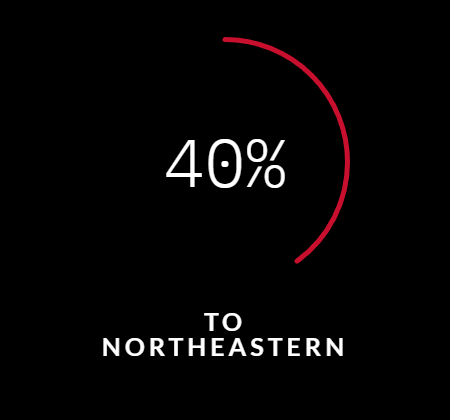
Yes. Revenue is distributed to inventors according to Northeastern University policy and any applicable funding agreements. 30% to inventors, 30% to the lab, and 40% to Northeastern. Refer to the Faculty Handbook Patent and Copyright, Section 4.
Can CRI help fund further development?
CRI can:
- Provide limited internal support
- Connect you with translational funding opportunities
- Support grant applications
What if I collaborate with another university or industry partner?
CRI will:
- Review agreements
- Clarify IP ownership
- Coordinate with partner institutions
Ownership and rights depend on funding and collaboration terms.
What happens if I move to another institution?
Options may include:
- Northeastern continuing to manage the IP
- Transferring rights to your new institution
Inventors typically retain their share of any future revenue.
VENTURE / SPINOUTS FAQs
What is a spinout?
A spinout is a startup company formed to commercialize university-developed technology.
When should I consider a startup vs. licensing?
This depends on:
- Market opportunity
- Technology maturity
- Your interest in involvement
CRI helps evaluate the best path.
How do I get started with a spinout?
Engage CRI early. We support:
- Opportunity assessment
- Company formation
- Licensing the technology
- Connecting with investors and resources
Who receives equity in a spinout?
Equity is typically shared among:
- Founding researchers
- Northeastern University
- Investors
Terms are determined based on Northeastern policy and specific circumstances.
Will I be able to stay involved in the company?
Yes, depending on your interest and university guidelines.
Faculty often serve as:
- Scientific founders
- Advisors
- Board members
What are the benefits of forming a spinout?
- Translating research into real-world impact
- Attracting investment and partnerships
- Creating new funding and research opportunities
- Potential financial return
Do I have to work with CRI to form a spinout?
Yes—if the technology is university-owned.
CRI ensures:
- Proper IP licensing
- Legal and financial protection
- Alignment with university policy
What are the benefits of working with CRI on a startup?
- IP protection expertise
- Deal structuring and negotiation
- Investor and industry connections
- Reduced personal risk
Is there a course I can take to learn more?
Yes—the CRI Academy on our YouTube page offers tutorials for all these FAQs: youtube.com/user/northeasterncri
INTELLECTUAL PROPERTY (IP) FAQs
What is an invention?
An invention is any new and useful process, machine, composition of matter, or improvement thereof. Inventions can be protected by patents, which provide the right to prevent others from making, using, or selling the invention without permission.
What is CRI?
The Center for Research Innovation (CRI) is Northeastern University’s technology transfer office. We help faculty protect, manage, and commercialize intellectual property—bridging research and real-world impact.
What do I need to disclose—and when?
If your invention was developed using university resources, funding, or within the scope of your role, Northeastern policy requires disclosure to CRI.
Best practice: Disclose before publishing, presenting, or publicly sharing your work.
Why is early disclosure important?
Public disclosure (e.g., publications, conference presentations, posters, or online posts) can limit or eliminate your ability to secure patent protection—especially internationally.
Early disclosure ensures we can properly assess and protect your work.
What counts as public disclosure?
- Journal articles or preprints
- Conference presentations or posters
- Theses (if publicly available)
- Conversations with external parties without confidentiality protections
Even a single external disclosure can impact patent rights.
Can I present my work internally?
Generally yes—if all participants are Northeastern employees.
If external collaborators, sponsors, or visitors are present, it may be considered public disclosure. When in doubt, consult CRI.
What happens after I submit a disclosure?
CRI will:
- Review your invention
- Assess patentability and market potential
- Determine a protection strategy
- Recommend whether to pursue patenting
We may also begin early commercialization outreach.
What if CRI decides to file a patent?
- Northeastern covers all patent-related costs
- You will work with external patent counsel to refine the application
- Filing can typically occur within weeks, depending on readiness
Will filing a patent delay my publication?
No. Patent applications can be filed quickly and are designed to align with publication timelines.
Once filed, you are free to publish.
How long does patent protection take?
Patent prosecution typically takes 4–6 years, though protection begins at the time of filing.
Who owns my invention?
Under Northeastern policy:
- The university typically owns IP developed using university resources or within your role
- Inventors are always credited and share in any resulting revenue
What types of IP can be protected?
Depending on the innovation, CRI may pursue:
- Patents (for inventions)
- Copyrights (for software, reports, media)
- Trade secrets (for confidential know-how)
What is not protectable?
- Abstract ideas without a defined application
- Natural discoveries without a specific use
Protectable IP generally requires a clear, functional implementation.
INSTRUCTIONS
Navigate to the CRI Inventor Portal website and click Request Account. Follow the instructions to request a new account and you will receive an email to claim your account. Please note the email sent to your inbox will be from [email protected] via [email protected]. This email will allow you to register your account. If you do not receive an email check your SPAM folder.
Once you follow the link, you will be prompted to create an account. Please make note of your username and password for future logins. When the form is complete click the Create an Account button at the bottom of the screen.
USING THE PORTAL:
The portal will continue to track your invention disclosure status, as well as patent applications and licenses.
Log in to check the status of your invention disclosure. Click on the Disclosures tab to see the status of all invention disclosures on which you are listed as an inventor.
INVENTOR FAQs
What is CRI?
CRI (Center for Research Innovation) is the university’s tech transfer office. We help protect, manage, and commercialize the intellectual property created by our faculty, researchers, and students. Think of us as the bridge between your lab and the real world.
What does a tech transfer office do?
We evaluate inventions, file patents, register copyrights, negotiate licenses, and support startups. Our goal? To turn great ideas into real-world impact—and make sure you get credit and support along the way.
What’s a patent?
A patent protects inventions—like a new cancer drug, a solar-harvesting window coating, or a smart sensor system. If it’s new, useful, and not obvious, we may be able to patent it and prevent others from using it without a license.
What does copyright protect?
Copyright protects creative works—like software, written reports, infographics, videos, or datasets. It applies automatically, but registering it can give you even more rights.
How do we protect your work?
Say you’ve developed a breakthrough machine-learning model. We’ll help determine if it’s patentable, copyrightable, or should be kept as a trade secret—and handle the protection strategy.
What kind of deals can come from IP?
Your invention might be licensed to a company—or become the basis of a startup. We help set up the legal agreements so your innovation can generate impact (and revenue).
Is it ever too late to file a patent?
If you’ve published, presented, or posted online, the clock is ticking. In the U.S., you have 12 months to file a patent. In many countries, you get no second chance. Talk to us early!
Why disclose to us?
Disclosing your invention means telling us what you created before you publish or present. That’s step one in protecting it and exploring paths to commercialization.
What happens after I disclose?
We review your disclosure, follow up with questions, and decide whether to file for protection. We may also explore licensing, marketing, or startup support.
Do I own my invention?
If it was developed using university resources, the university likely owns the IP—but you’ll always be listed as the inventor and share in potential revenue.
What’s not protectable?
A raw idea—like “AI but for plants”—isn’t enough. We need a working method, design, or application. Also, natural discoveries (like finding a new gene) aren’t patentable unless there’s a specific use.
FULL FILING DECISION
The CRI uses the year while the provisional application is pending to continue commercialization and marketing efforts. Depending on the results of such efforts, as well as the status of the technology, CRI may or may not pursue a non-provisional application.
Filing a non-provisional patent application
The inventors will usually be contacted by Northeastern’s outside patent counsel to assist in drafting the patent application. This generally consists of meeting/phone call with outside counsel, updating research results, data, and technical information, and reviewing the specification and claims that outside counsel drafts. The CRI may file a non-provisional application in the US only (known as a Utility Patent Application) or the CRI may file a PCT application, which is considered a foreign filing, and preserves rights to pursue patent protection in all participating PCT member countries. The CRI’s policy is to file in the US only, unless there is a license agreement in place (in which instance the CRI will file in the jurisdictions requested by the licensee, as the licensee is responsible for the costs).
Filing a US utility application only
Substantive prosecution begins “immediately.” Generally, you can expect the first Office Action within one year. An Office Action is a communication from the USPTO wherein the Patent Examiner may reject one or more – even all – of the claims submitted in the application for a variety of reasons, including obviousness, lack of enablement or written description, lack of novelty, or lack of patentable subject matter. An Office Action does not mean Northeastern will not get a patent; it is incredibly rare to not get at least one and usually several Office Actions as we prosecute the patent. Outside counsel, sometimes with input from the inventor(s), will draft arguments in response to the rejections, and will sometimes amend the claims to avoid the rejections altogether. This response and any amendments will be submitted to the Patent Examiner for his/her consideration and further response. This back and forth process is patent prosecution.
Filing a PCT application
Substantive prosecution does not begin right away. When pursuing this type of non-provisional application, the CRI has until 30 months or 31 months (depending on the country or region) from the date of filing of the initial application (in NU’s case, the provisional application) to select jurisdictions to pursue patent protection in – (e.g. Europe, Japan, Canada, Australia). However, the International Searching Authority will conduct a search of the prior art and provide its written opinion of the general patentability of the invention. There is no response required to this communication, but it can inform amendments to the claims down the line. Once jurisdictions have been elected for entry off of the PCT application, substantive prosecution will begin in each jurisdiction (e.g. if the CRI elects to enter the US and Japan, we will get office actions, or the equivalent, from both the US and Japan individually).
Decision not to pursue a non-provisional patent application
The inventor(s) will receive a notice that the CRI is not continuing to pursue patent protection for their invention. Should the inventors wish to pursue patent protection on their own and at their own expense, they may contact the CRI, who will assist in this process.
While any non-provisional application is pending, the CRI will continue commercialization and marketing efforts. Depending on the commercialization process, as well as the patent process, the CRI may decide not to continue patent prosecution of any given patent application. At that time, the inventor(s) will be notified and should the inventors wish to pursue patent protection on their own and at their own expense, they may contact the CRI, who will assist in this process.
MARKETING & OUTREACH
If a provisional application is filed for your disclosure, the CRI Commercialization Team will begin conducting initial marketing and outreach to industry. In coordination with the inventors, we will identify key markets for the technology, as well as companies within those markets. While our primary aim is to find potential licensees for the technology, we also seek industry feedback, which we will share with the inventors. We will also use this industry feedback to help inform the decisions we make with regards to the IP.
COMMERCIALIZATION AND PATENTING
If a non-provisional patent application is filed, the CRI Commercialization team will continue its efforts in marketing the technology to industry. Using a variety of channels, the CRI, along with its marketing partners will seek companies interested in commercializing the technology. We may help to facilitate meetings and discussions between the inventors and interested parties, and coordinate the execution of non-disclosure agreements, material transfer agreements, and license agreements. While seeking commercial collaborations with companies, we will continue to share all industry feedback with the inventors, and will use that feedback to help inform our ongoing patent prosecution decisions.
Patent prosecution will be ongoing and will require the inventor’s continued involvement with response to any office actions. Inventors will be notified of granted patents.
INITIAL INTERNAL REVIEW
Upon receipt of an electronically filed Invention Disclosure Form, CRI will conduct a preliminary assessment of the technology, focusing on the commercial potential and readiness of the invention. CRI will review the technology using information provided in the disclosure, as well as independent market research.
Assessment is based on: (1) stage of technology development, (2) regulatory challenges, (3) size of commercial market and presence of competing products/services, (4) financial drivers, and (5) market trends. The CRI also conducts a cursory patentability review, considering the whole of your portfolio and the state of the art (e.g., Is this merely data to support an earlier disclosure? Is this a crowded technology space?).
The initial review substantially informs the Provisional Decision (Step 4), and the CRI requires a minimum of 4 weeks to complete. NU does not guarantee expedited filings for imminent disclosures if submitted less than 4 weeks in advance.
If there are commercial entities that have contacted you about this technology, or if there are potential partners you are interested in talking to, please contact the CRI regarding a non-disclosure agreement.
PROVISIONAL DECISION
Decision to Pursue Patent Protection
If the initial internal review indicates that there is sufficient commercial and patentability potential, the CRI will file a provisional patent application. A provisional patent application preserves the priority date for the invention but does not undergo substantive prosecution. In order to maintain the priority date and continue prosecution, a non-provisional patent application needs to be filed within one (1) year of the filing of the provisional application (see step #5). Not every provisional patent application that the CRI files is converted into a non-provisional application.
Decision Not to Pursue Patent Protection
If the initial internal review indicates that there is insufficient commercial potential, the inventor(s) will receive a notice that the CRI is not pursuing patent protection for their invention. Should the inventors wish to pursue patent protection on their own and at their own expense, they may contact the CRI, which will assist in this process.
PATENT LICENSING REVENUE DISTRIBUTION
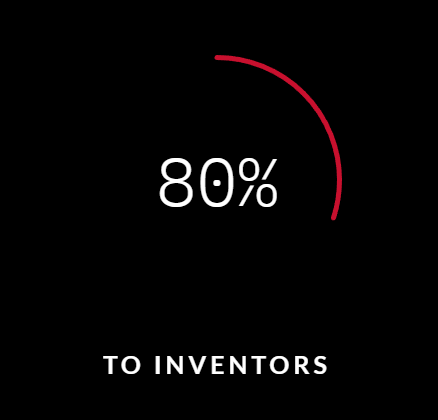
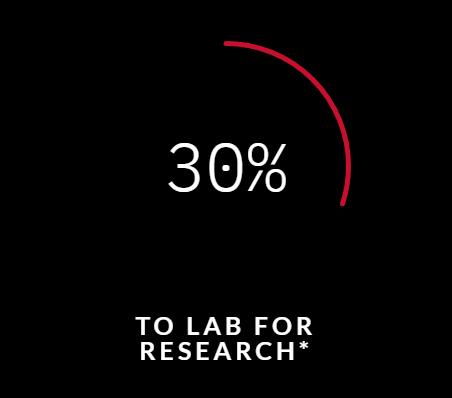
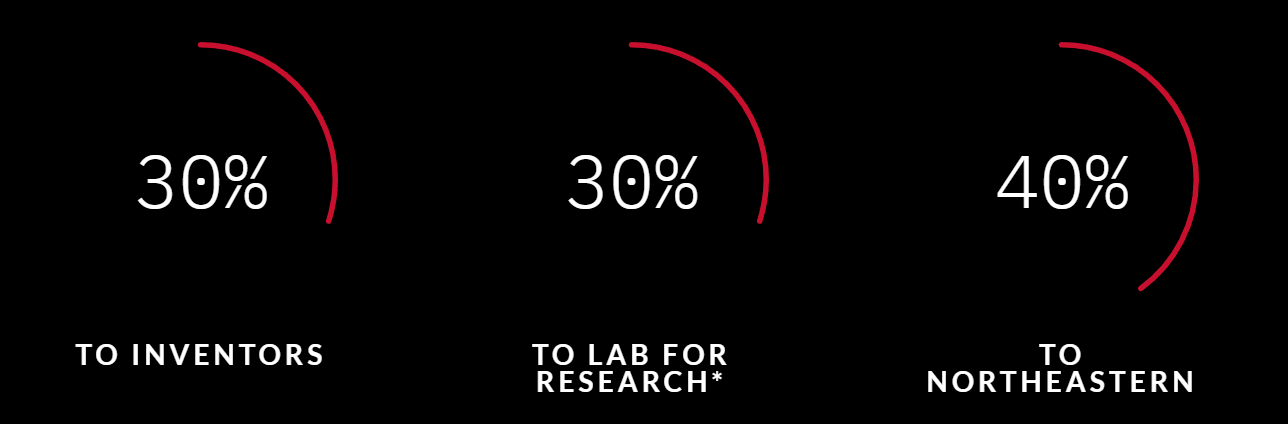
* Divided equally between direct support to the inventor’s research and the inventor’s unit
For Copyright Revenue Distribution, please refer to the Faculty Handbook Patent and Copyright, Section (4) (2) (e)