
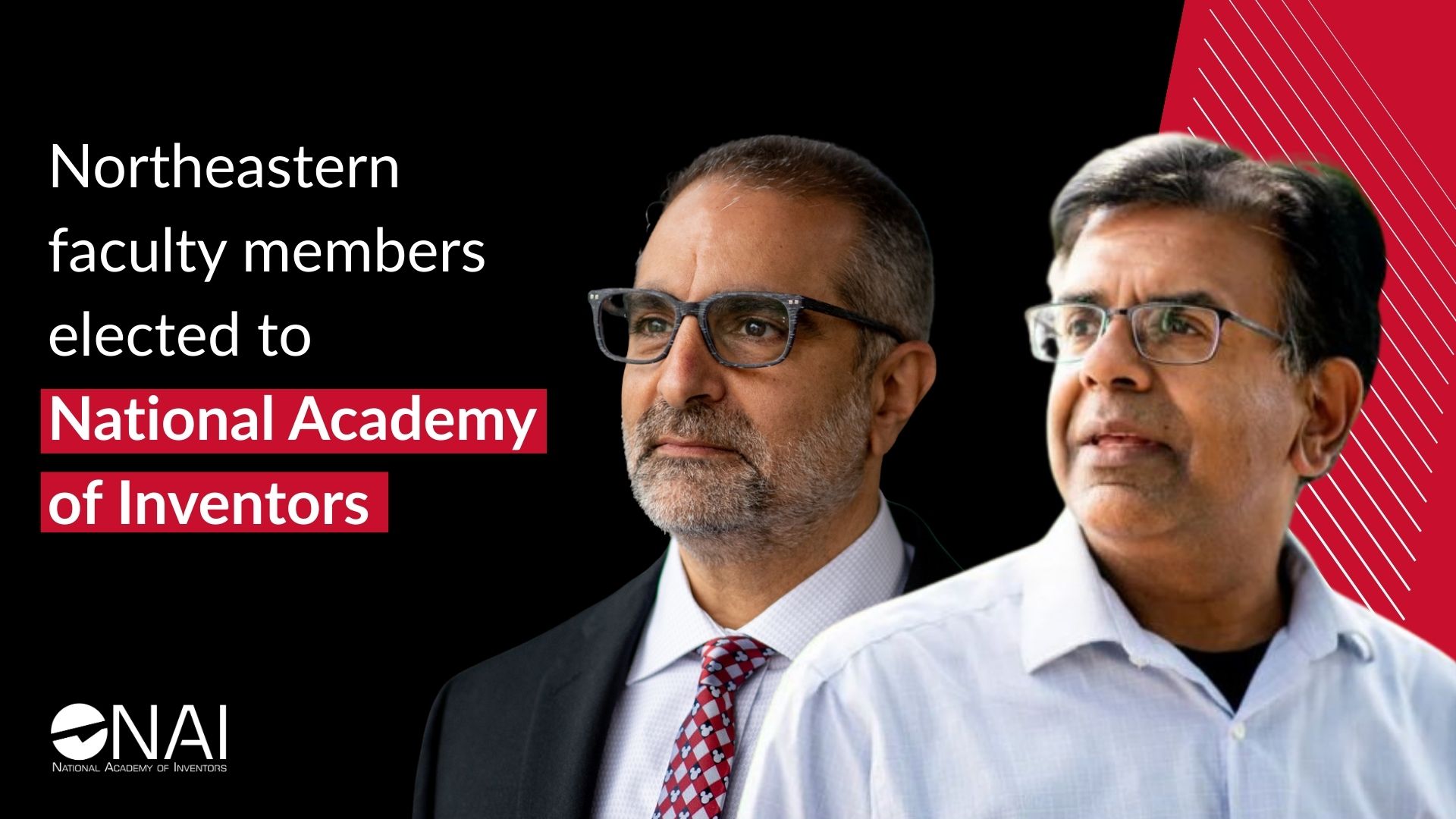
Two Northeastern University researchers—Gregory Abowd, Dean of the College of Engineering and Professor of Electrical and Computer Engineering; and Mansoor Amiji, University Distinguished Professor of Pharmaceutical Sciences and Chemical Engineering—have been named Fellows of the National Academy of Inventors (NAI) for 2025.
Election as an NAI Fellow recognizes inventors whose patented technologies have made significant, lasting contributions to society and the global innovation ecosystem. Established in 2012, the NAI Fellows program is one of the highest honors awarded to academic inventors in the United States.
This year’s class will be formally inducted at the 15th Annual NAI Conference, held June 1–4, 2026, in Los Angeles, where Fellows from around the world will be honored for their role in shaping the future of technology, health, and industry.
What It Means to Be an NAI Fellow
The National Academy of Inventors was founded in 2010 to recognize and support inventors whose work moves beyond discovery to create tangible societal and economic value. NAI Fellowship is about invention, honoring those who have made significant contributions to patents, commercialization, and the real-world adoption of new technologies.
Fellows are selected for their ability to turn ideas into innovations that address pressing global challenges. With more than 2,000 Fellows worldwide, the Academy represents an elite community of researchers who are reshaping industries and improving lives through innovation.
Gregory Abowd: Inventing Technology That Serves People
Throughout his career, Gregory Abowd has focused on one central question: how can technology better serve human needs?
A pioneer in human-centered computing and ubiquitous technologies, Abowd’s work has helped shape how people learn, communicate, and interact with the digital world. Long before technologies like digital classrooms and automated transcription became commonplace, he was designing systems that integrated computing seamlessly into everyday environments.
His inventions have supported people with disabilities, helped clinicians better understand autism, enabled new forms of mobile interaction, and created smarter, more responsive spaces. Over the course of his career, Abowd has secured more than 20 U.S. patents and founded multiple companies to bring these ideas into practical use.
For Abowd, translation beyond the lab has always been central to the mission.
“As a researcher, I have always desired that my work be seen as important to people outside of my immediate research community. Translating the research into commercial efforts is one way to demonstrate that,” he said. “So, it is with great pride that I accept being elected as an NAI Fellow in recognition of those accomplishments. It is also a testament to the outstanding students and collaborators I have had the privilege to work with over the past decades.”
His election to the NAI reflects a career spent turning human-centered research into fundamental tools that shape how people live, learn, and connect.
Mansoor Amiji: Advancing Therapies from Lab to Clinic
Mansoor Amiji has built his career at the intersection of pharmaceutical science, biomedical engineering, and real-world health impact. His work focuses on designing advanced drug delivery systems that make powerful therapies safer, more effective, and more accessible to patients.
Through decades of research, Amiji has developed technologies that address cancer, neurological diseases, and chronic conditions by improving how drugs reach their targets in the body. His lab has generated more than 25 patents, supported clinical trials with over two dozen pharmaceutical partners, and led to the formation of multiple biotechnology companies.
For Amiji, invention is about patients.
“I am deeply honored to receive the 2025 National Academy of Inventors Fellowship,” he said. “This recognition holds special meaning because it reflects our decades-long commitment to developing therapeutic delivery systems that can genuinely reach patients. None of this would be possible without the dedication of my students, postdocs, and collaborators, or without Northeastern University’s exceptional culture of innovation and entrepreneurship that transforms scientific discovery into real-world impact.”
In addition to his research, Amiji plays an active leadership role within Northeastern’s innovation ecosystem. He serves on the university’s NAI Innovation Board and helps guide strategic conversations around invention and translation through the Northeastern NAI chapter.
The CRI and Northeastern’s Expanding Innovation Ecosystem
The election of Abowd and Amiji as NAI Fellows reflects Northeastern’s growing strength as a place where ideas move beyond the lab.
Through programs like the Northeastern NAI chapter, led by the CRI, Northeastern supports faculty inventors as they navigate milestones such as patenting, licensing, company formation, and industry partnerships. The university’s emphasis on experiential learning, industry collaboration, and entrepreneurship creates an ecosystem where discovery naturally evolves into impact.
From assistive technologies to life-saving therapies, the work of these two Fellows illustrates how Northeastern’s researchers are addressing some of society’s most complex challenges.
Abowd and Amiji will be formally inducted into the National Academy of Inventors in June 2026 at the Academy’s annual conference in Los Angeles, joining a global community of inventors shaping the future of science, technology, and health.
To learn more about the Northeastern University Chapter of the NAI, visit cri.northeastern.edu/nai.